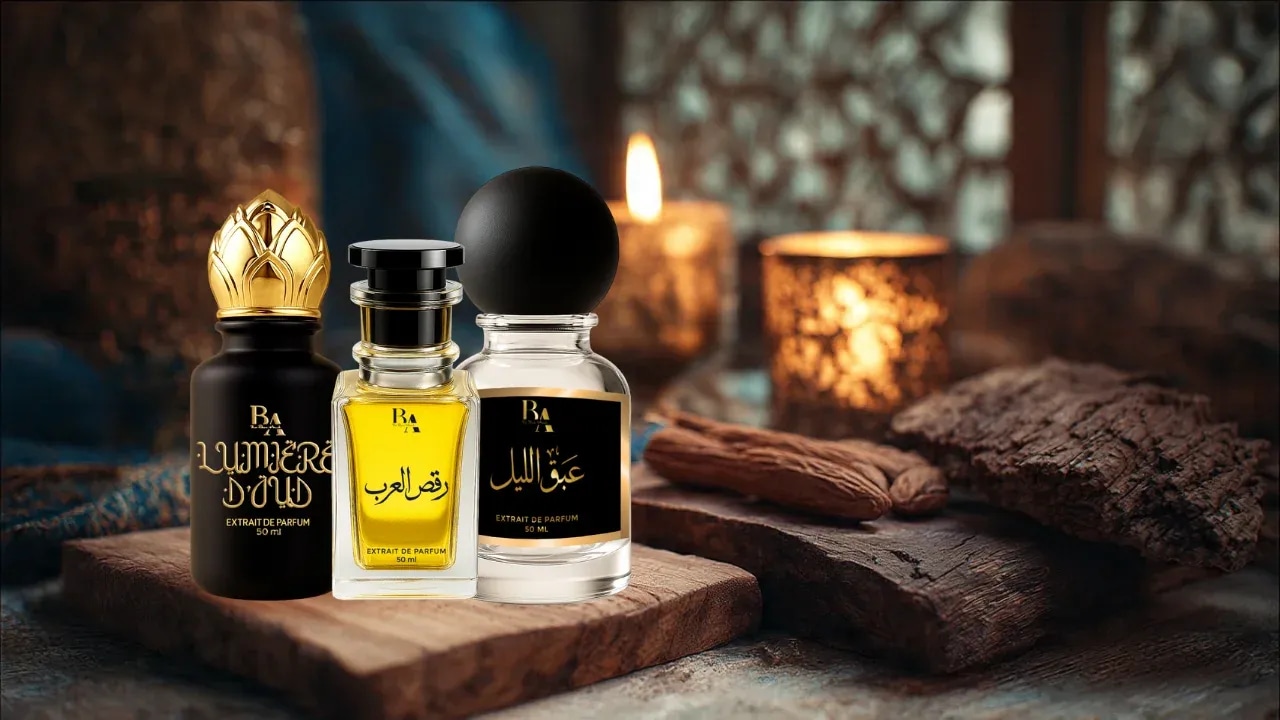
Oud is one of those raw materials in perfumery that almost everyone recognizes by reputation even if they have not smelled it. It has an aura of rarity and mystery. Historically valued in parts of South and Southeast Asia and the Middle East, oud has become a global commodity in modern perfumery. Its rise is an instructive example of how cultural practice, supply dynamics, and fashion can intertwine.
What is oud in practical terms? Oud, also called agarwood, is the resinous heartwood formed in Aquilaria trees when they are infected by a certain mold. This infection triggers a defense reaction in the tree that produces a dark, fragrant resin. Not every tree produces it. The highest grade oud is rare and costly to harvest. Historically it was burned as incense or used as a prized perfume ingredient in regional traditions, especially in Gulf countries where the scent is woven into daily life.
The texture of oud is complex. It can be smoky, animalic, woody, resinous, sweet, or tar-like depending on origin, age, and processing. Perfumers prize oud because it provides depth and personality that few other materials can. It can anchor a composition or stand as a striking center of gravity.
With global demand rising, oud has moved from regional luxury to worldwide curiosity. Several forces have driven that shift. High-end fashion houses and niche perfumers began to experiment with oud as a way to create scents that felt both luxurious and distinct. Celebrities and influencers have carried these scents into new markets. At the same time, creative use of synthetics has allowed perfumers to evoke oud-like characteristics without the same supply constraints.
This evolution, however, is not without controversy. Overharvesting and illegal trade have threatened Aquilaria forests in parts of Asia. Sustainable cultivation and ethical procurement are now central concerns. Responsible houses and niche perfumers emphasize traceable sources, cultivation projects, or the use of lab-created molecules that mimic oud’s qualities. The debate is not binary. There are well managed plantations and poorly regulated markets. The consumer today must navigate marketing claims and ask questions about sourcing if sustainability matters to them.
Oud’s popularity also raises aesthetic questions. In some markets, oud retains its cultural associations and is used in traditional ways. In other markets, perfumers reinterpret oud by pairing it with citrus, florals, or gourmand notes to produce a hybrid sensibility. These reinterpretations can be innovative, but they can also dilute cultural context if presented without acknowledgment of origin. Perfumery is a global craft but it is also a cultural practice. Respectful curation recognizes both.
For the wearer, oud offers powerful versatility. A modern oud scent might be smoky and masculine in one formulation, sweet and floral in another, or clean and almost soapy in a third. Try several expressions before settling on one. Oud can be intense and long lasting. A little often goes a long way.
Looking ahead, the trajectory of oud will be shaped by environmental policy, agricultural innovation, and consumer ethics. The raw material itself will not vanish from perfumery, but its role may be altered by supply chain improvements and synthetic counterparts. For anyone who appreciates perfume as a craft, oud remains an important study in how scent connects to culture, ecology, and commerce.